Research

Superconducting circuits as a quantum laboratory.

We make quantum devices from patterned aluminum films and Josephson junctions on sapphire, then cool them to about 10 millikelvin in a dilution refrigerator. At that temperature, electrical currents flow collectively and without resistance, producing controllable energy levels that can serve as artificial atoms.

Microwave electronics let us prepare, manipulate, and measure superpositions and entangled states with carefully shaped pulses. The combination of custom hardware, programmable control, and engineered dissipation gives us an experimental setting where both the quantum system and its environment can be designed.

That freedom has enabled milestones including a 2016 demonstration of a Schroedinger cat state shared between two boxes, and 2021 autonomous quantum error correction that protected a bosonic qubit through continuously engineered dynamics. Today, we build on those ideas to make quantum information more robust, more efficient to process, and more capable of moving in useful directions.
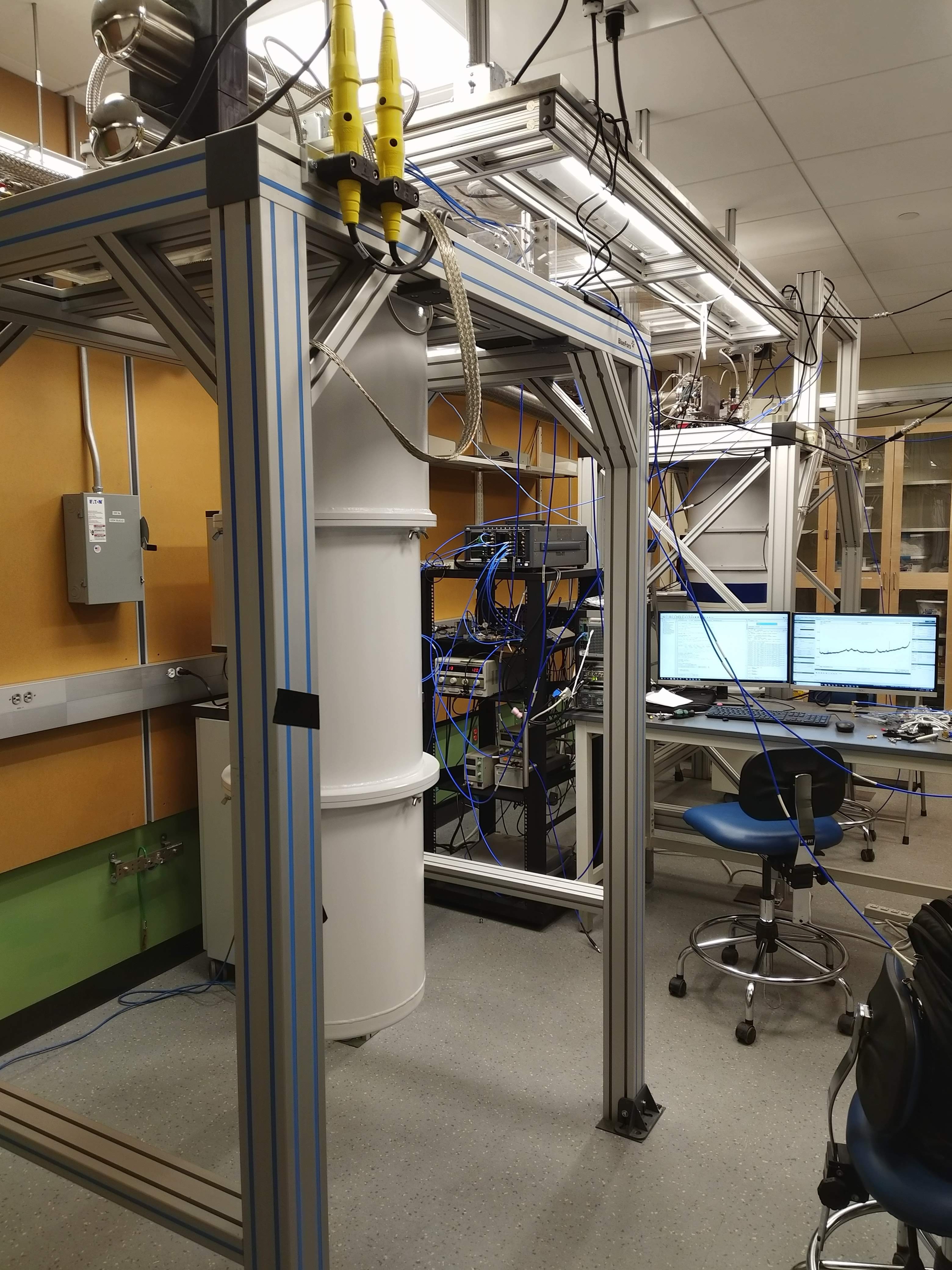
Dilution refrigerator and measurement setup used for superconducting-circuit experiments.
01

Stabilization

Autonomous Quantum Protection

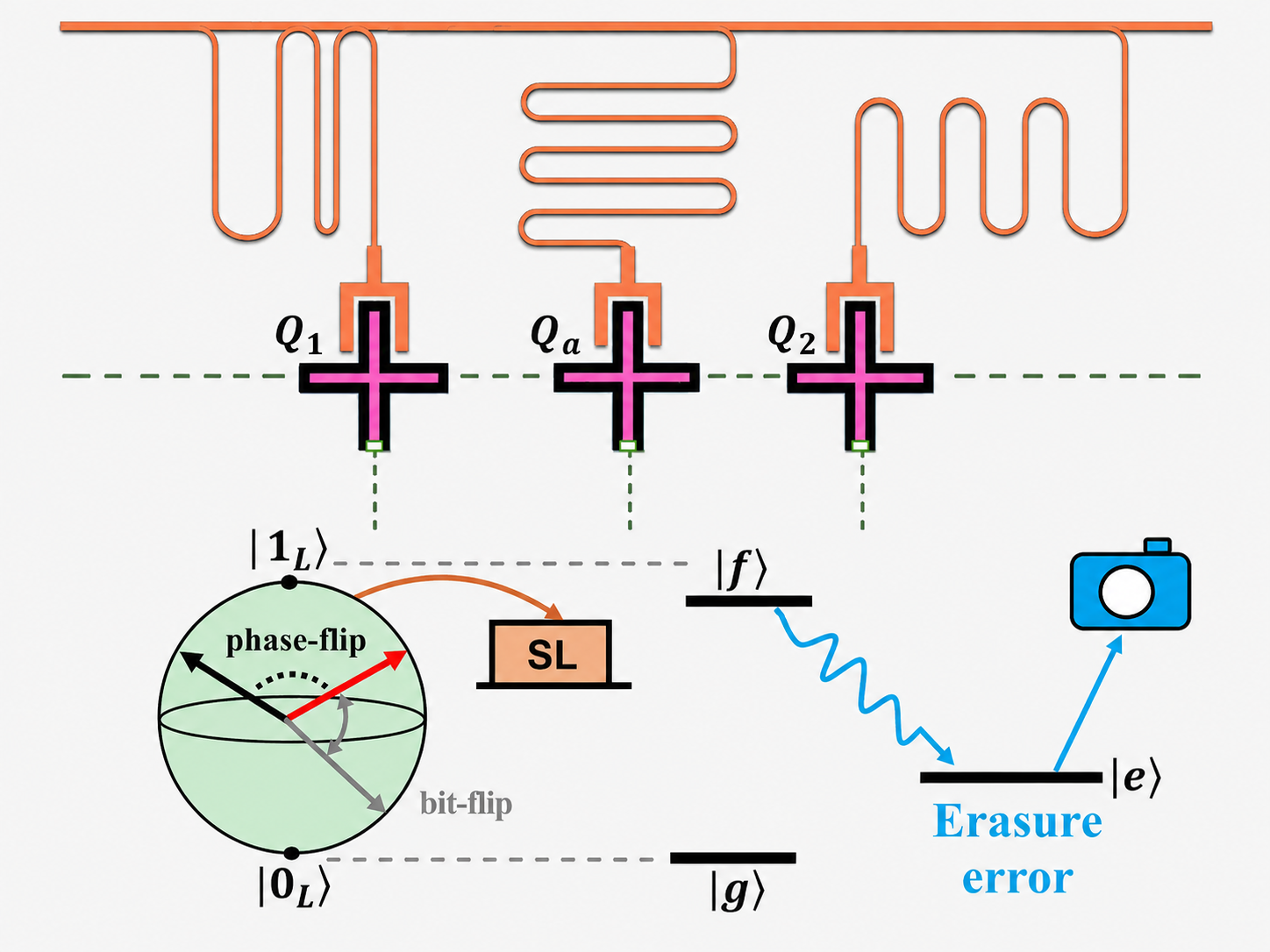
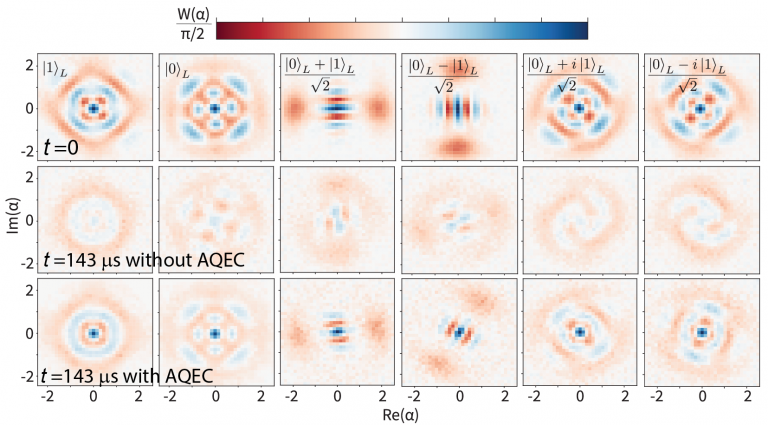
We combine bosonic codes with driven, dissipative circuits so that the hardware can turn photon loss into a correctable process. The goal is a logical qubit whose protection is continuously supplied by the engineered environment, reducing the need to repeatedly measure errors and apply external feedback.

Wigner-function reconstruction of a passively protected bosonic quantum state.
02

Spectroscopy

Decoherence in New Regimes

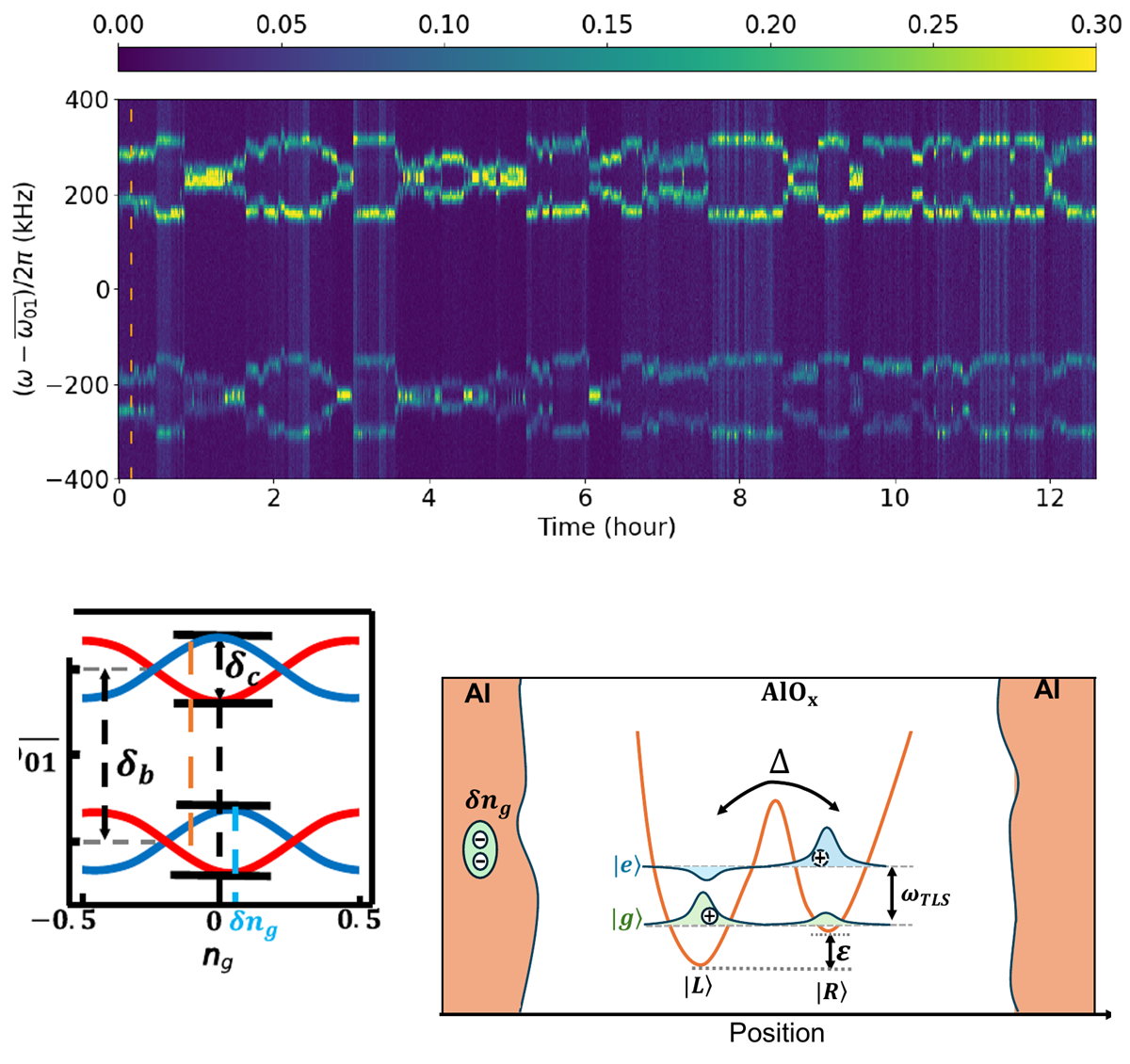
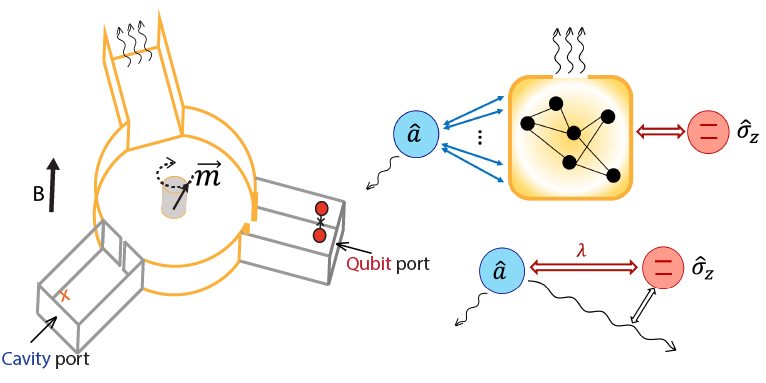
Superconducting qubits can lose coherence through microscopic defects, charge and flux fluctuations, quasiparticles, radiation, and other environmental modes. We develop two-timescale relaxometry and joint mapping of charge-parity and TLS states to isolate individual channels and determine how their slow dynamics reshape qubit relaxation. The goal is to identify the mechanisms that limit emerging devices and guide their mitigation.

Repeated spectroscopy revealing discrete charge-state fluctuations above a charge-sensitive energy-level diagram and a schematic of a coherent two-level system in a Josephson-junction tunnel barrier.