01
Stabilization
Autonomous Quantum Protection
We use reservoir engineering and bosonic encodings to stabilize fragile quantum states and realize autonomous protection against dominant errors.
Experimental quantum information science
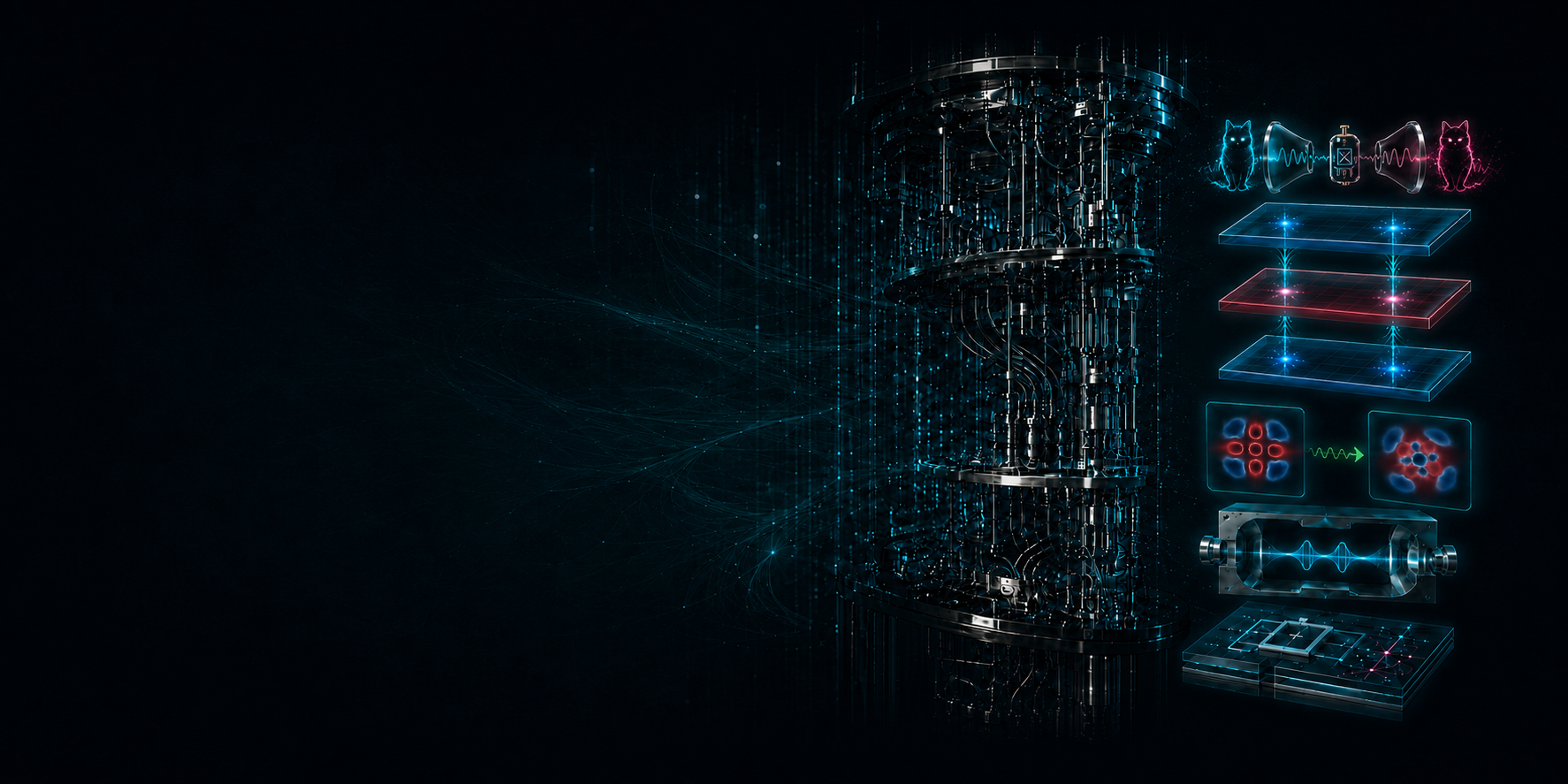
Superconducting circuits for protecting, processing, and directing quantum information.
Launching in Toronto · 2026
After a decade of work at UMass Amherst, the lab is building its next generation of superconducting quantum experiments in Toronto.
Research themes
Superconducting qubits are one of the leading platforms for quantum computing, with active development across both academia and industry. Their combination of engineered quantum circuits, precise microwave control, and strong light-matter interactions provides an unusually flexible setting for quantum science. We use this circuit-QED toolbox to study how quantum information can be protected, manipulated, and transported, and to develop new approaches to quantum hardware.
Explore researchStabilization
We use reservoir engineering and bosonic encodings to stabilize fragile quantum states and realize autonomous protection against dominant errors.
Spectroscopy
We investigate two-level systems and other microscopic loss mechanisms in emerging superconducting circuits and previously unexplored parameter regimes.
Error correction
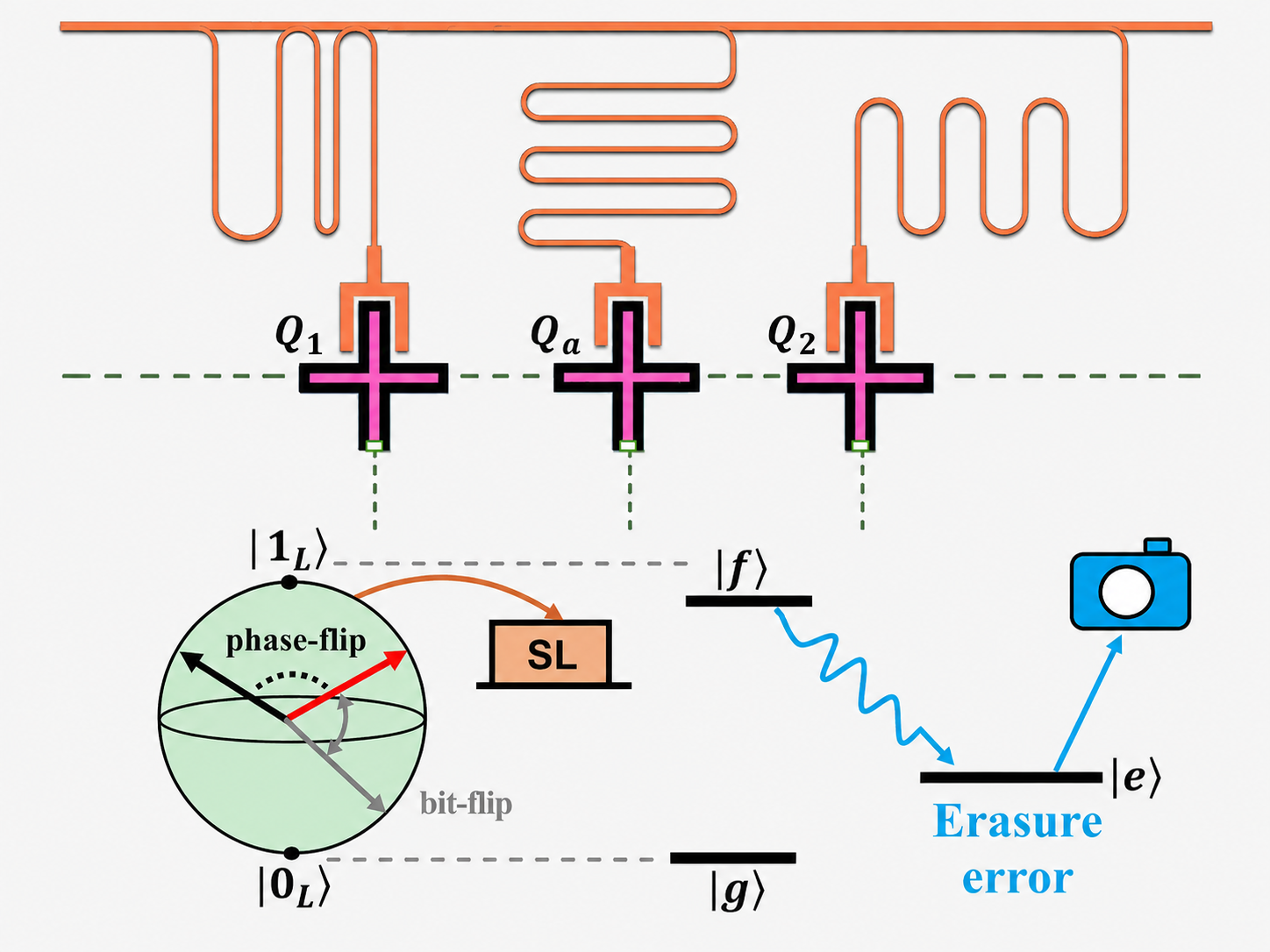
We develop erasure qubits, efficient multi-qubit gates, and architectures that reduce the physical resources required for reliable quantum computation.
Nonreciprocity
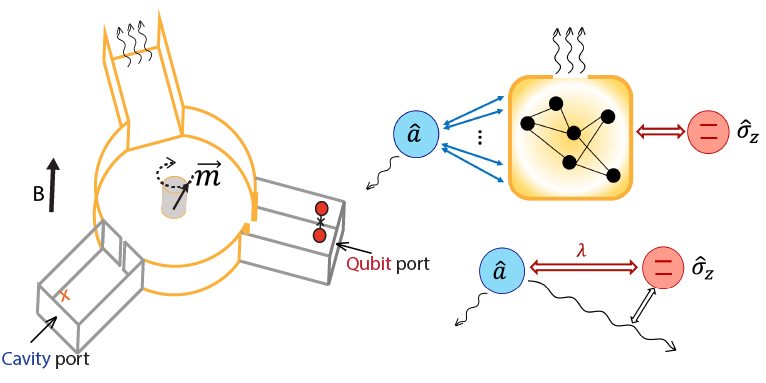
We engineer dissipation and nonreciprocity to control how quantum information and excitations flow through circuit-QED systems.
Recent work
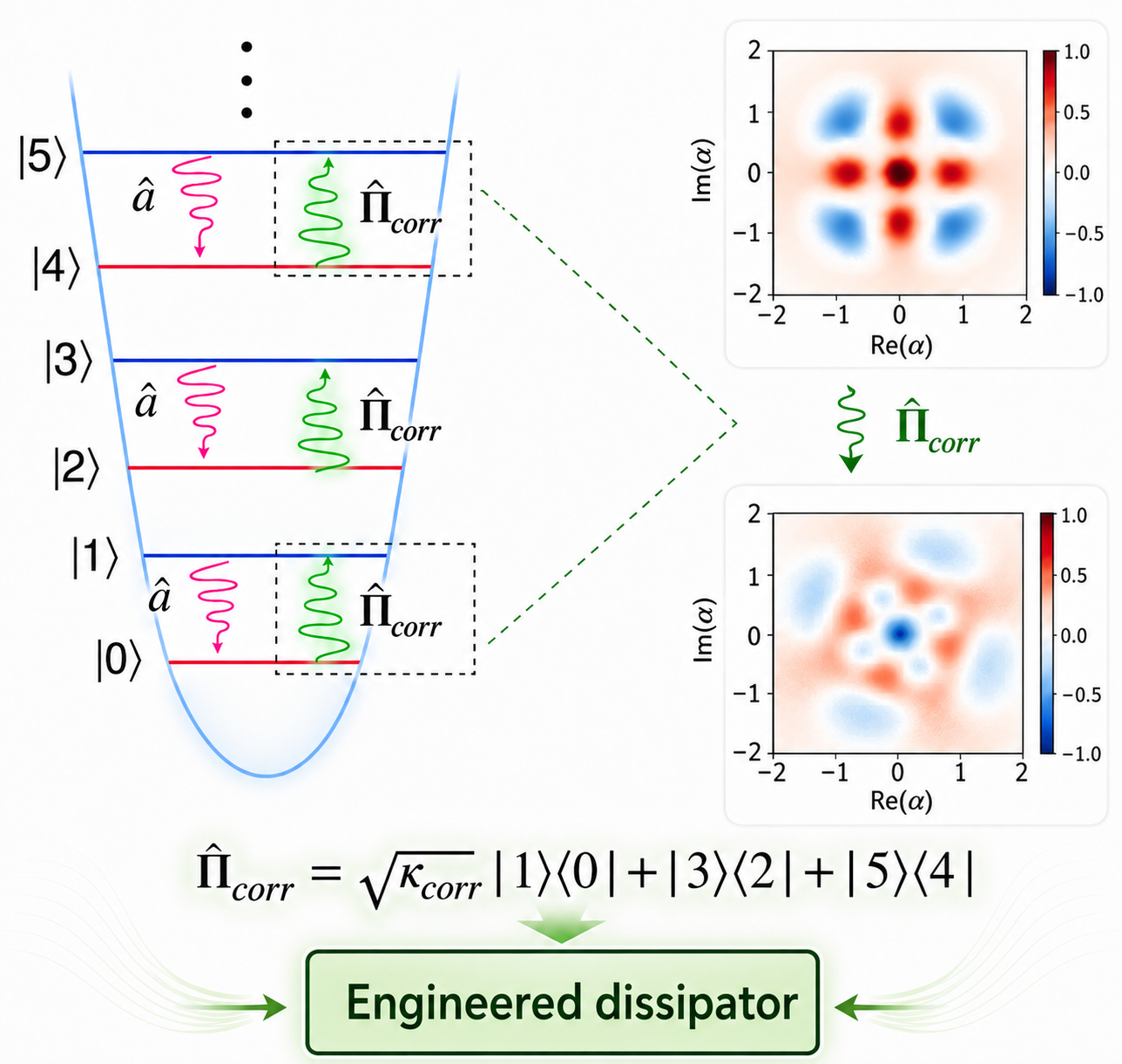
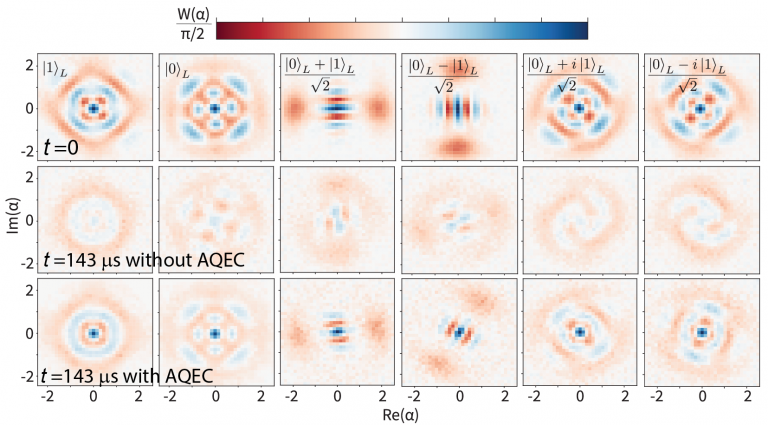
Photon loss is a central challenge for quantum memories. In a steady-state, driven-dissipative system built from a superconducting cavity and transmon ancilla, the team protects a binomially encoded logical qubit without measurement-based feedback. The resulting logical coherence exceeds the photon-lifetime limit by about 5 percent. Published in Physical Review X, the experiment demonstrates continuous passive correction operating at breakeven and offers a practical route toward protecting fragile quantum information with engineered dissipation.
Read the paperThe team proposes an erasure-qubit encoding that uses the ground and second excited states of a superconducting transmon qutrit. Because the dominant relaxation process becomes detectable, it can be treated as an erasure rather than an unnoticed error. With repeated ancilla-assisted detection, the post-selected logical T1 exceeds 500 microseconds, about ten times the physical-qubit T1. The arXiv work also reports high-quality single-qubit control and heralded Bell-state preparation in this encoding.
Read the paper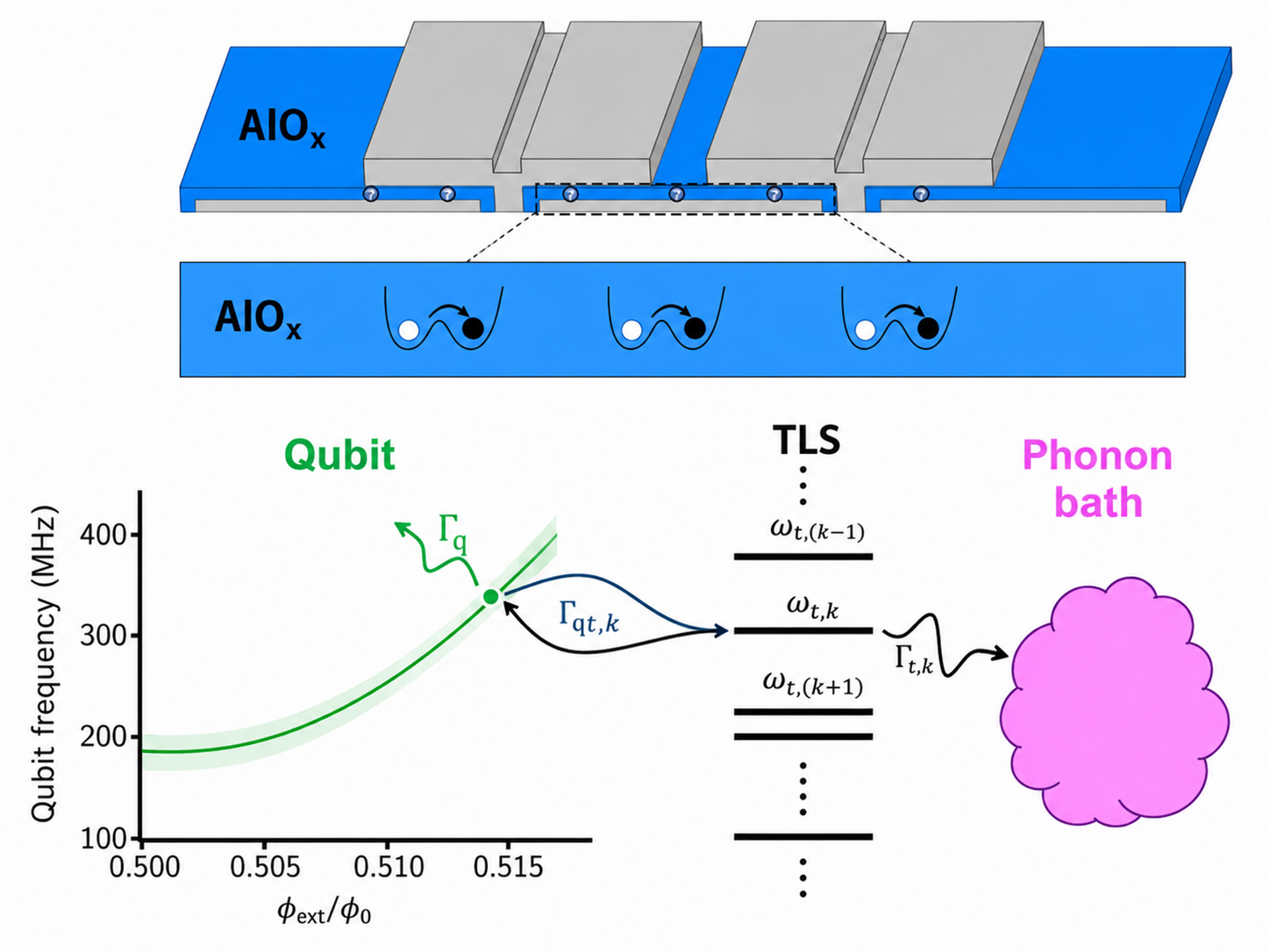
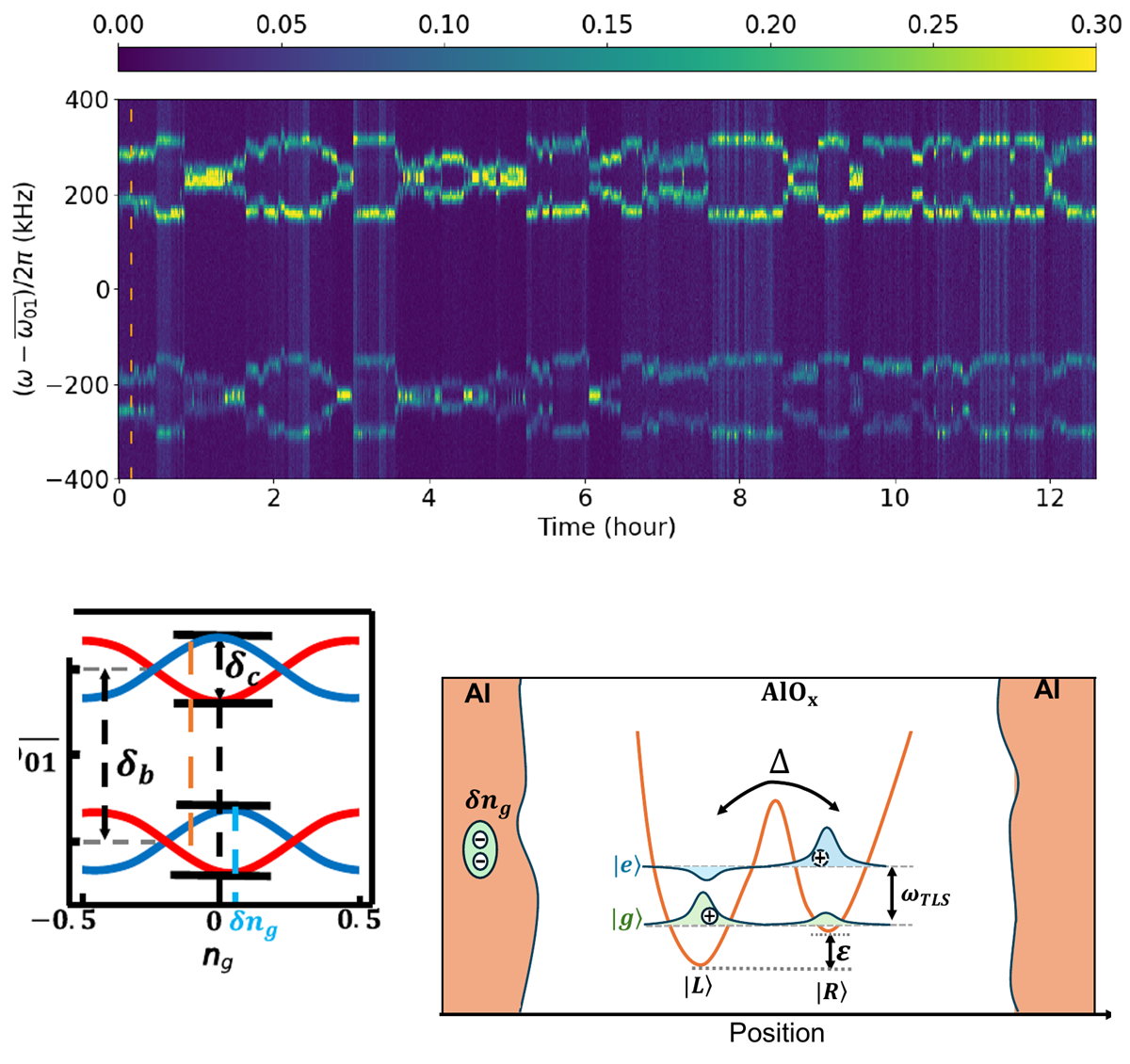
A qubit does not relax alone: its environment has dynamics of its own. This Nature Communications study uses two-timescale relaxometry to probe fast and slow relaxation across roughly 0.1 to 0.4 GHz. The measurements reveal a discrete spectrum of two-level systems with millisecond lifetimes, consistent with defects in the aluminum-oxide tunnel barriers of a fluxonium junction chain. The result turns relaxation into a useful spectroscopic tool for understanding microscopic loss in superconducting circuits.
Read the paperThe group
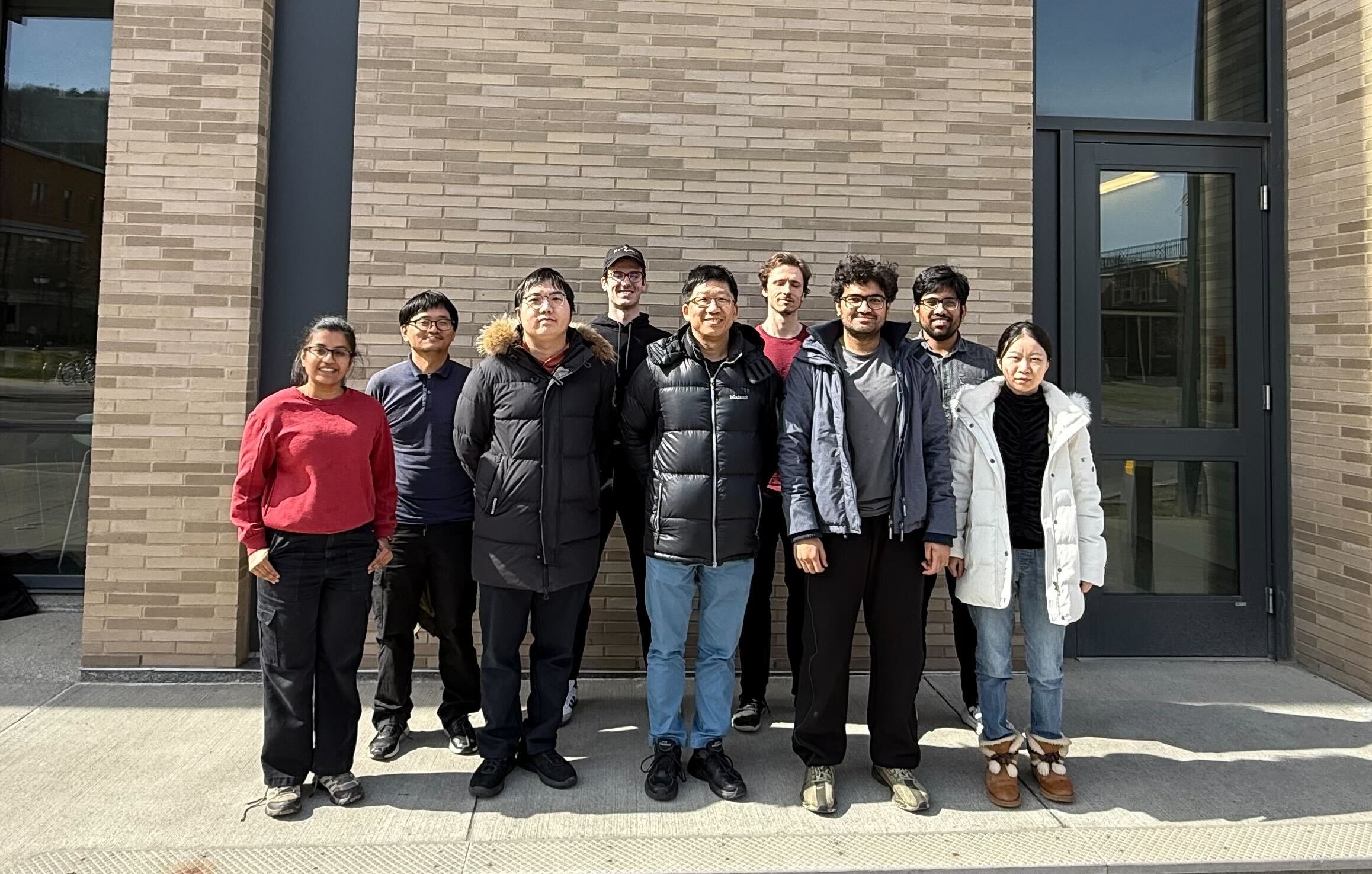
Our current team carries forward the people and questions that shaped the lab's first chapter, while opening space for new collaborations and new experiments.
Meet the group